
Minnesota lawmakers discuss bill to curb loss of farmland to energy infrastructure

<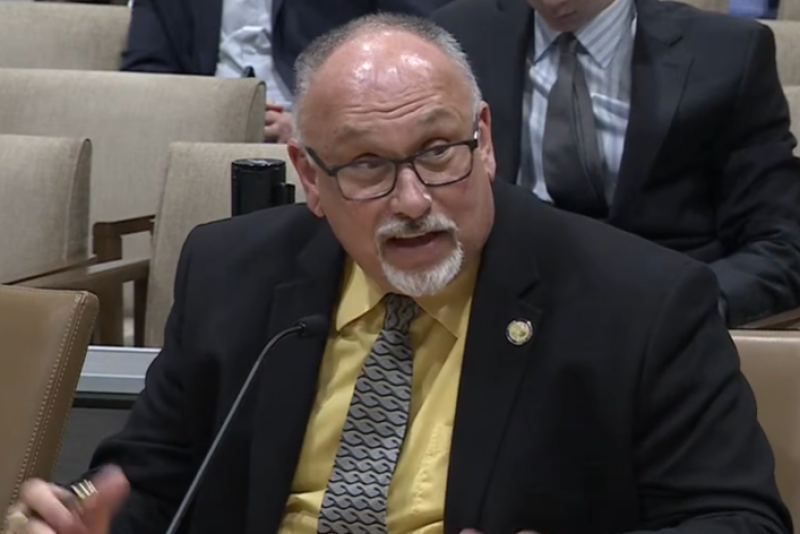
“Once converted, there’s no guarantee that this land would ever come back to agriculture,” Kupec said during introductions on Monday, April 13, during a Senate Ag Committee informational hearing.
He said this was not an anti-solar bill.
Energy companies came out strongly in opposition to the bill, while a farmer claimed it is necessary to secure prime farmland for now and into the future.
Dana Allen-Tully, board member of the Minnesota Corn Growers Association and an Eyota farmer, testified in favor of the bill.
She said the pressures from outside forces have been picking away at Minnesota’s farmland for the last 20 years.

Allen-Tully said two solar projects near her farm are expected to take nearly 3,000 acres of prime farmland out of production. She shared concerns that the land may never come back to farming.
“At a minimum, I think that we have to, as a feedlot, let everyone know what we are doing, within a mile — if we are changing land use, number of animals, any of those things,” she said. “Why would there not be some touchpoint for a local government to have input into where they choose to put solar installations?”
Beyond that, she said she worries about how the next generation can ever afford farm land if it continues to disappear.
Sen. Gary Dahms, R-Redwood Falls, said Minnesota Conservation Reserve Enhancement Program land would be a better place to put solar arrays and still preserve the land for wildlife. CREP is a voluntary, state-federal partnership targeting 66 counties in southern and western Minnesota to protect environmentally sensitive land. He said the state should work with the federal government to address this issue.
“We’re seeing in my country, good farm country, we’re seeing more and more land going to these solar gardens, and something’s going to have to be done,” he said.
Alex Cutchey, senior policy manager with Geronimo Power, said this bill would take away farmers’ control to utilize their land for power production. He said he saw the solar arrays as a profitable “crop” for producers that allows the land to rest. He said while the bill was aimed at protecting farmland, he feared it was a bill meant to override farmers’ choices.
According to the bill, once land is designated as prime farmland, the state cannot issue a large site permit without county board approval. Cutchey said that means the farmer or landowner paying for that land loses control of it. A landowner has an option to opt out.
“But if they fail to do that, they lose the ability forever, and also any successor or signee with the land loses the ability with that choice, with their land,” he said.
Crutchey added that using farmland for solar is voluntary and often seen as a 25-30-year “crop” that could be compared to CREP, but is privately paid rather than publicly funded.
Madelyn Smerillo, deputy director of siting and permitting policy with American Clean Power Association, also testified in opposition. She made a point that landowners know their land best and know what combination of crops to grow to remain sustainable. She responded to concerns about environmental issues related to solar arrays. She said even in extreme weather events, studies have shown, according to the International Energy Agency, solar panels pose no danger to human health or the environment even in the event of breakage or fire.
Sen. Torrey Westrom, R-Alexandria, mentioned work in his district related to pasture-grazed solar installations and how counties should consider these more marginal farm lands for energy infrastructure.
“We are going to keep talking about this,” said Committee Chair Sen. Aric Putnam, DFL-St. Cloud. ”This is our first conversation among many.”
Kupec closed by saying Minnesota needs to do better at looking at areas that are less suitable for ag for energy developments moving forward.
The bill would be held over for possible inclusion in an omnibus bill.
]]>

