
Making the grazing gamble pay off

<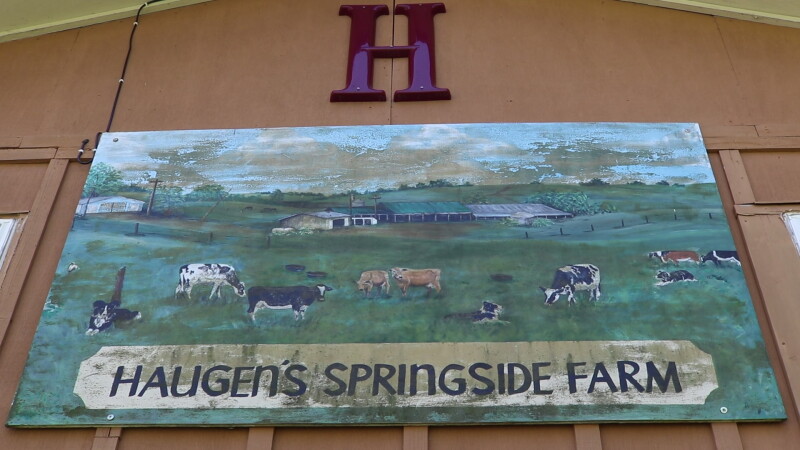
Two and a half years in, the couple they had started with decided the life was not for them and returned to Wisconsin. The Haugens bought them out and kept going.
“We borrowed the money for the cattle, we borrowed the money for the machinery, we borrowed the money for the milking equipment,” Vance Haugen said. “All of it’s paid back.”
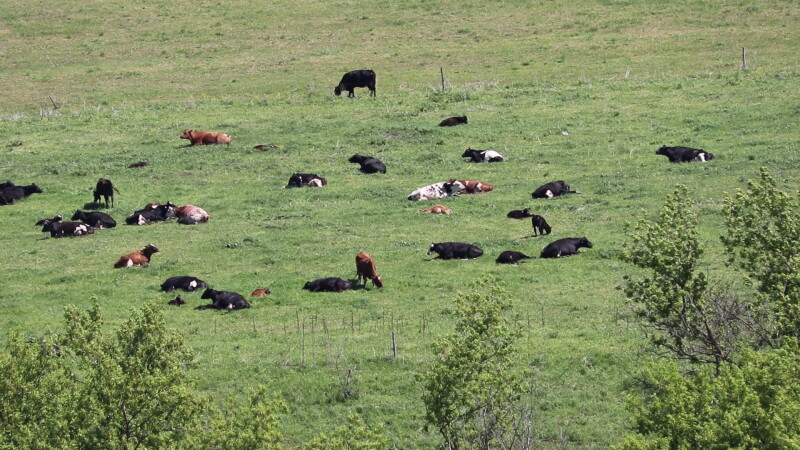
The early years were a hard education. Bonnie Haugen, who later spent years mentoring apprentice grazers across Minnesota through the Dairy Grazing Apprenticeship program, remembered the learning curve with a smile, while sitting on a rocking chair outside of their home, which sits on a hill overlooking the pasture.
“It was exciting,” she said. “I thought, this is going to be simple. Just get the cows out to eat the grass. But it’s really confusing, because you can only eat what grows.”
Bonnie Haugen described the failures. Fences went in the wrong places. A lane cut too close to a spring turned unusable after rain. Plants on the south-facing slopes behaved differently than those on the north-facing slopes or in the valley. What worked for one neighbor did not necessarily work for them.
“You’ve just got to go,” she said. “And then you figure out what questions to ask.”
That instinct of knowing who to call, and not just what to do, became the core of what she tried to pass on during her years running the apprenticeship program in Minnesota.
“My one goal was, at the end of it, I hope the apprentice learns as much as they can,” she said. “But what I wanted them most to learn was who they could go to for what questions.”
An evolving system
Vance Haugen described what conventional grazing consisted of at its worst when they first moved onto the farm.
“The old style, which the technical term is set stocking,” he said. “Is where you got 200 acres, you put your head out there in May, and in October you come back and see if anybody’s alive. Pretty damn poor way to do it.”
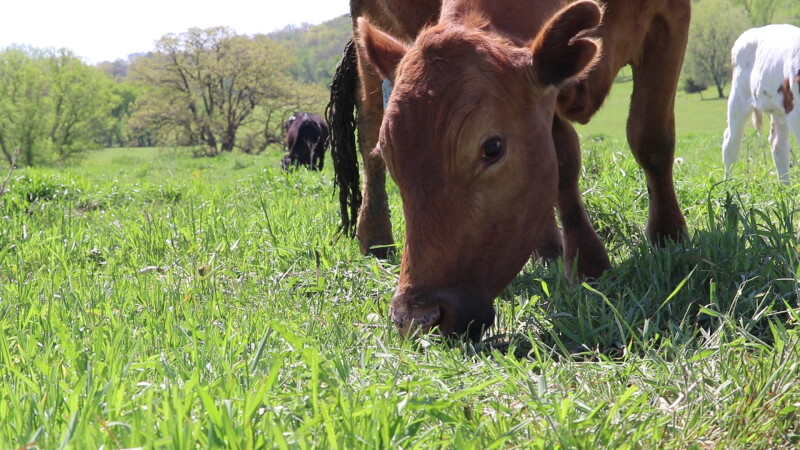
What rotational grazing offers instead is active management through subdividing pasture into paddocks, and moving animals frequently, and letting the land recover before cattle return. The goal, Vance Haugen said, is to balance the needs of the cattle, the needs of the land and the needs of the plant simultaneously. Also, to maximize both the production of grass and its consumption.
“It doesn’t always work,” he said. “There’s train wrecks. There’s drought, there’s mistakes, there’s species failure. But the whole idea is to get those things together.”
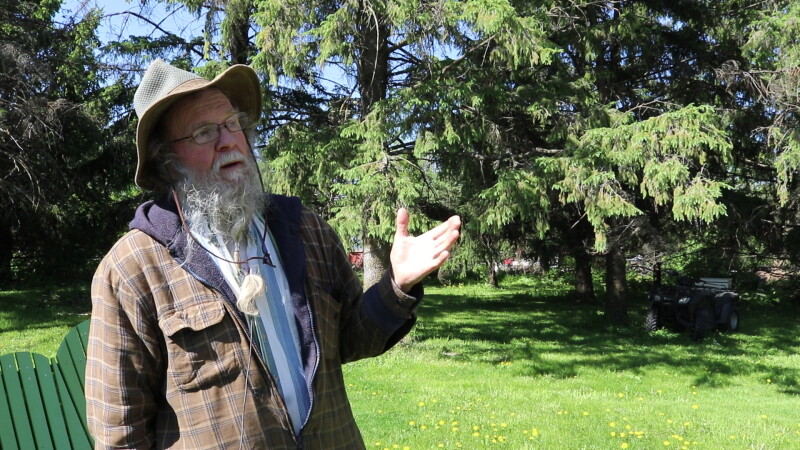
At Springside, that process has meant different forage mixes for different terrain. South-facing slopes planted differently from north-facing ones, lower ground managed separately from the ridge. Soil testing every three years for more than three decades has tracked the results, Haugen said. Organic matter is up roughly 2 percentage points, while phosphorus and potassium levels are strong, and nitrogen inputs have dropped sharply.
“Things have built up,” Vance Haugen said. “Very little nitrogen needs to go on.”
Based on USDA, Economic Research Service (ERS) commodity cost and return estimates, feed expenses are the largest operating cost for cow-calf producers, comprising 75% of the costs in 2021.
The next generation
Olaf Haugen grew up on the farm he is now running today, and doing it his own way.
Three to four years ago, he made the decision to close the dairy, because he said labor was hard to find, margins were tight, and he was able to make peace with the direction.
“Small dairies are screwed,” his father, Vance said. “The big guys keep getting bigger. You can’t blame the processors, because they can pick seven tanker loads from one place, or go to 30-some places. I can see it. But it really sucks.”
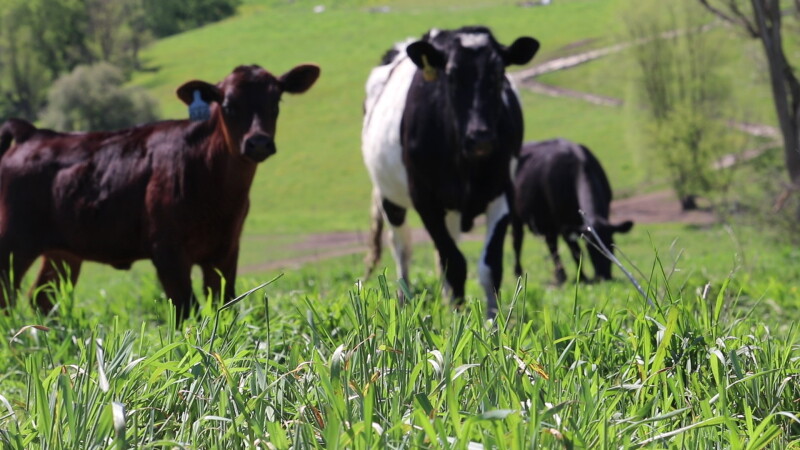
What remains is the grass, the land and a management philosophy that Olaf has adapted rather than abandoned. The plan consists of daily moves on the entire herd, temporary electric fencing that takes 10 to 15 minutes to set up, and rest periods tracked on a calendar, revolving around 25 to 40 days in spring, stretching toward 50 in drier summer stretches.
“A lot of it’s pretty low-tech solutions,” Olaf Haugen said. “Write things down on a calendar when they were there and go back and say, well, 30 days, 40 days, 50 days. But every year is a little bit different.”
Olaf said he has not used commercial fertilizer in five or six years, and the nutrient cycle runs through the animals.
“Once you get them to the point where they can kind of cycle, it is pretty impressive what you grow,” he said.
His biggest cost is feed for the winter, and said his goal is to maximize grazing acres, because that is the cheapest way to put feed in front of cattle.
“Fertilizer right now is pretty nuts, so I’m just happy not to be involved in that,” he said.
High fertilizer prices contribute to increased feed costs while drought conditions squeeze feed grain and hay supplies, according to a USDA Economic Research study from 2022.
In the 2024 documentary-series
“
Roots So Deep (You Can See the Devil Down There),”
in which five pairs of neighboring farms across the southeastern U.S. were compared to measure soil carbon, nitrogen, bird populations, insects, microbes, water infiltration and livestock health, one Louisiana cattle producer interviewed said he once wrote a $90,000 fertilizer check in a single fall season before transitioning away from synthetic fertilizer use. A Tennessee cattle producer participating in the project estimated three years of nitrogen fertilizer costs could equal the price of a $30,000 to $60,000 tractor.
Researchers from the documentary said none of the adaptive multi-paddock grazing farms in the study applied commercial nitrogen fertilizer, relying instead on nutrient cycling through livestock manure.
The documentary focuses on the difference between conventional grazing and adaptive multi-paddock grazing, but Olaf Haugen said his family has never really cared how their grazing is defined.
“I honestly don’t even know what the difference is between the two terms,” Olaf Haugen said.
His father is similarly unbothered by the terminology.
“Tomato, tomato,” Vance Haugen said. “If you’re doing a good job of rotational grazing, you’re also looking at the big picture.”
What it takes
Bonnie Haugen spent years watching beginning grazers succeed and stumble through the Dairy Grazing Apprenticeship program, which paired aspiring farmers with experienced mentors across Minnesota and Wisconsin. The program had a completion rate above 50%, which she said was better than most apprenticeship programs nationally. But it was still a reminder that the lifestyle is not for everyone.
“It looks glamorous,” she said. “And then when you start to really do it, and really realize there are many days that are long days, and sometimes you fall into it, literally.”
What separated those who stayed from those who left, in her view, was not knowledge, but adaptability, and the willingness to observe, adjust and ask for help.
“Managed intensive grazing is just that,” she said. “Managed. You can’t open up your cookbook and say, on May 12 we’re going to do this. On May 12 it could be hot as hell.”
She described a morning early in her own grazing years, after sending cows to a hilltop paddock the night before, then riding out after chores to find the spot too hot, no breeze and being the wrong choice entirely.
“I’d sit there a little bit, say, oh no, this isn’t a good spot today,” she said. “And I would change it within half an hour.”
That kind of attentiveness is what separates a well-managed grazing system from one that struggles, Bonnie Haugen said, and what the public often misunderstands about farmers who do this work.
“Farming is truly everybody’s bread, butter and water,” she said, “Because what we do on our land really affects the water quality and quantity for everybody.”
Money, policy
Before the latest Minnesota legislative session ended, the Haugens were watching a Minnesota bill that would create a rotational grazing pilot program, funded at $2 million from the state’s environment and natural resources trust fund. Grants of up to $25,000 per farm would support fencing, watering infrastructure and perennial forage establishment, with a 50% farmer match. Companion bills were introduced in the House and Senate in March, but neither made it into any legislation that passed this session.
Bonnie Haugen was part of the Southeast Minnesota Nitrate Working Group Collaborative, which recommended expanding such programs specifically because of the connection between managed grazing and groundwater quality in karst terrain — the fractured limestone geology underlying much of the region.
At the federal level, the National Fish and Wildlife Foundation announced in April 2026 a first round of $32.8 million in grants under its new Grassland Resilience and Conservation Initiative, a seven-year, $200 million effort backed by McDonald’s USA, USDA’s Natural Resources Conservation Service and several major beef suppliers. Sand County Foundation, one of six initial grantees, received $7.8 million to work with ranchers across 14 states, including Minnesota.
“This first round of grants from the Grassland Resilience and Conservation Initiative shows what can happen when corporations, federal agencies, conservation organizations and private landowners join forces to support both wildlife conservation and economic prosperity. This initiative is just getting started,” said Jeff Trandahl, executive director and CEO of NFWF. “We are confident it will play a leading role in grasslands conservation across the nation for years to come.”
Vance Haugen has watched attitudes toward grazing shift considerably since the early 1990s, when he was among a wave of early adopters trying to convince skeptical neighbors that moving cattle through paddocks was not eccentric, but it was smart.
“I think it’s really, really improved,” he said. “A lot of people really understand that cattle on the land can be a real positive thing for soil health, water infiltration, all of those things, if done correctly.”
“In 10 minutes, I saw rotational grazing is just the way to do it. And 30 some years later, I can still see there’s ways you can improve it. But it’s a great system, and it can work for so many different people.”
]]>
